


In this stage you cycle almost entirely on the route of the old Pontebbana railway, transformed into a wonderful cycle path. From Tarvisio you cycle for a few kilometers uphill until you reach the Sella di Camporosso. From this point, which marks the watershed between the Adriatic Sea and the Black Sea, continues downhill following the course of the Fella river.
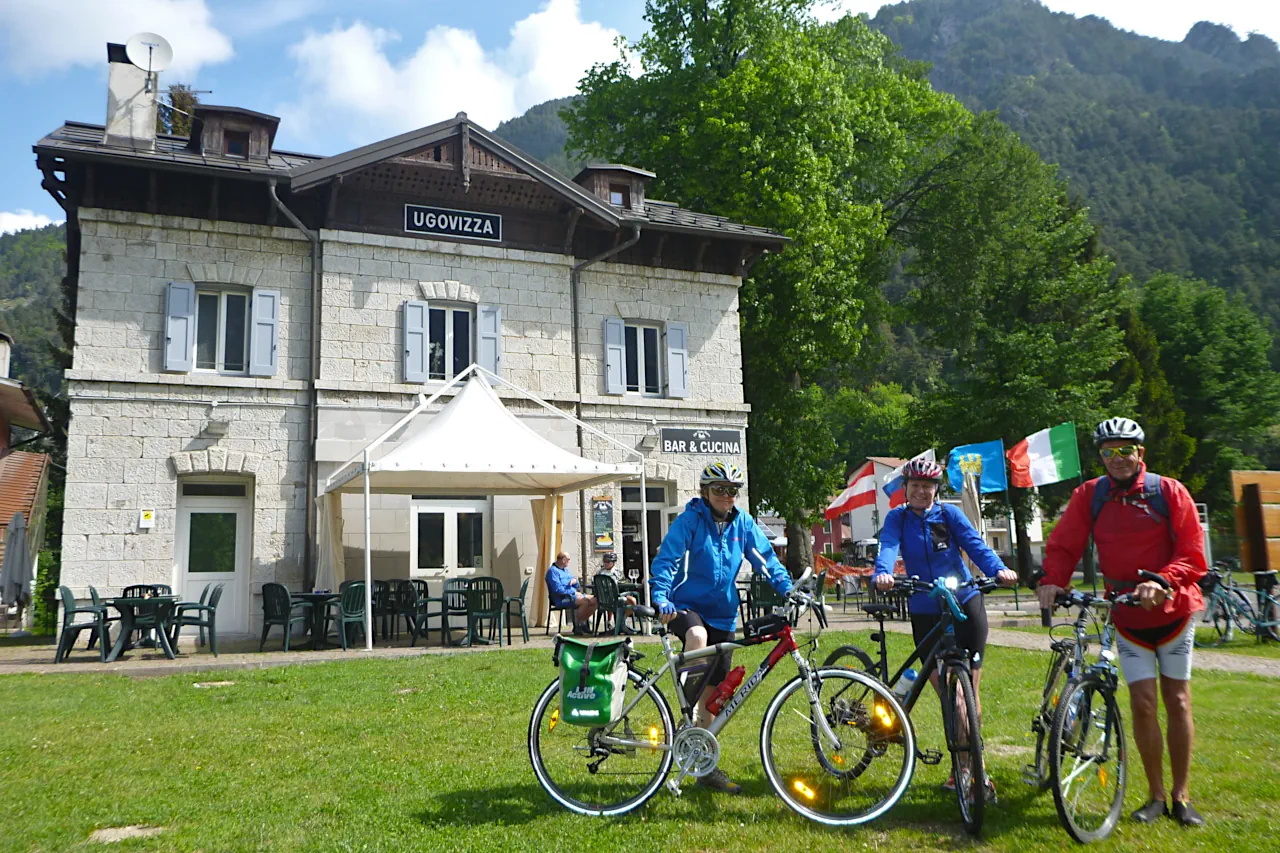
Do not miss a stop at the historic station of Ugovizza, transformed into a bike grill, and a detour to visit the characteristic alpine village of Malborghetto. After Pontebba, a town that for centuries represented the border between Italy and Austria, the cycle path heads south entering a narrow valley. You pedal on the former railway that descends towards the plain touching the villages of Dogna, Chiusaforte, Moggio Udinese and Carnia until you reach the enchanted fortified village of Venzone.
Description of the stage
Let's start again from Tarvisio continuing to pedal slightly uphill, always on the old railway track transformed into an asphalted cycle path. Leaving the town we cross another stretch of the millennial forest of Tarvisio to then continue in the midst of well-kept meadows until we reach Camporosso, a characteristic alpine village that stands right on the homonymous saddle, one of the lowest passes in the Alps and a watershed between the Adriatic Sea and the Black Sea.
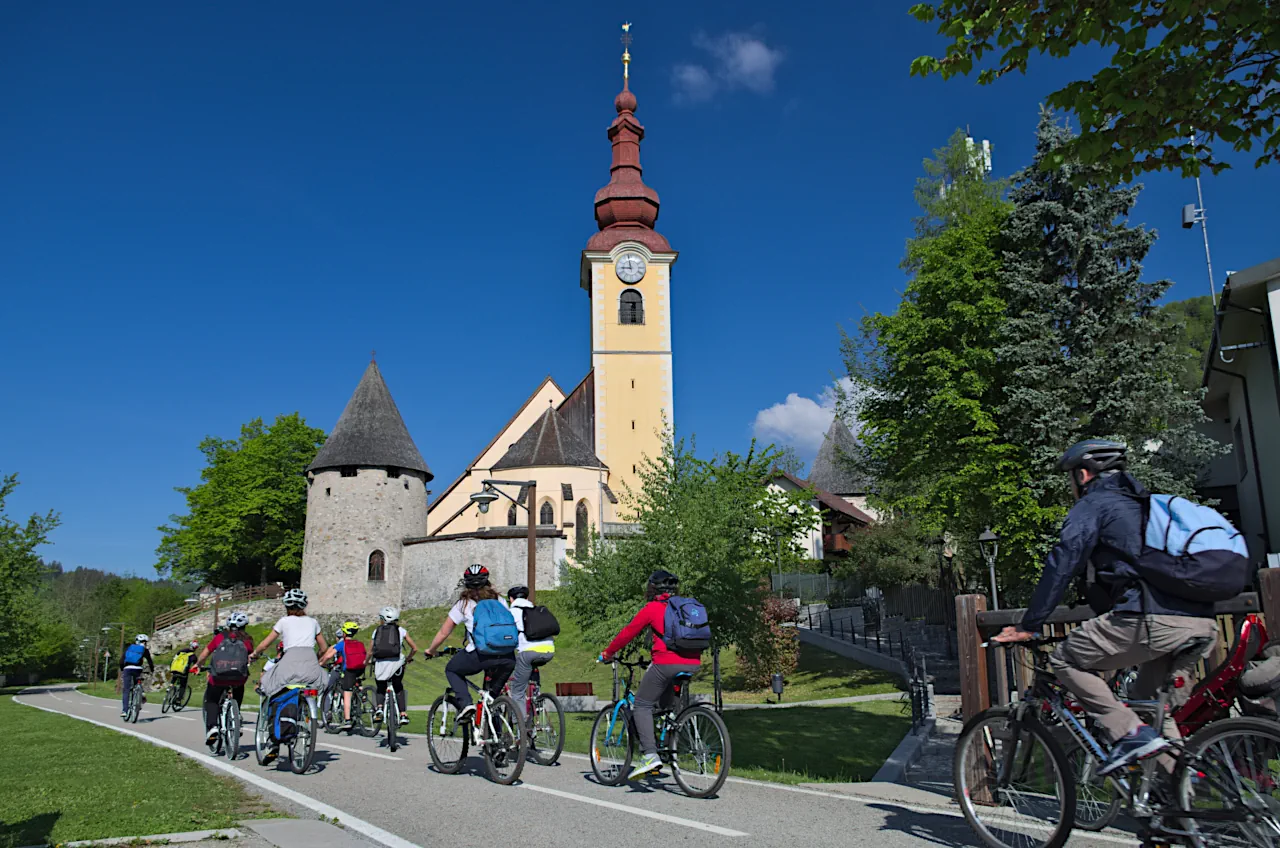
After passing the village and the cable car that goes up to the Sanctuary of Monte Lussari, cyclists still have to face a short uphill effort to reach the old "Culmine" of the railway on the Sella di Camporosso (817 m). From here begins the long and fun descent along the Val Canale, always pedaling on the paved cycle path built on the site of the old Pontebbana railway.
Once you reach the old station of Valbruna, we recommend a short detour to visit this delightful alpine village from which you can admire the suggestive views of Val Saisera and the spectacular north face of Jof Fuart.
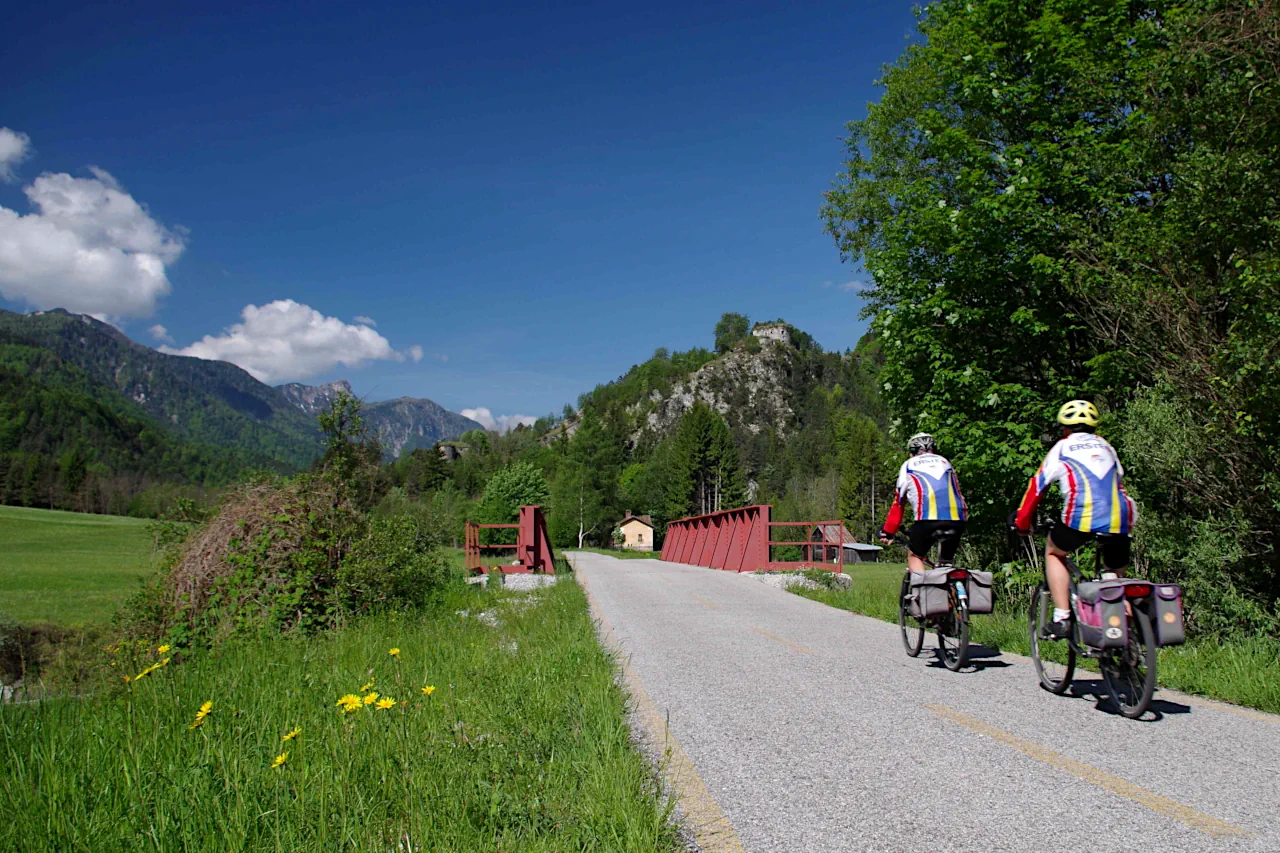
The Alpe Adria cycle path continues its descent passing through woods and meadows and passing Ugovizza, with the old station transformed into a refreshment point. Once you get to the first tunnel in Malborghetto, I recommend a short detour to visit this picturesque alpine village which still has many historic buildings intact. Among these, the Palazzo Veneziano, which also houses an important ethnographic museum, is worth a visit.
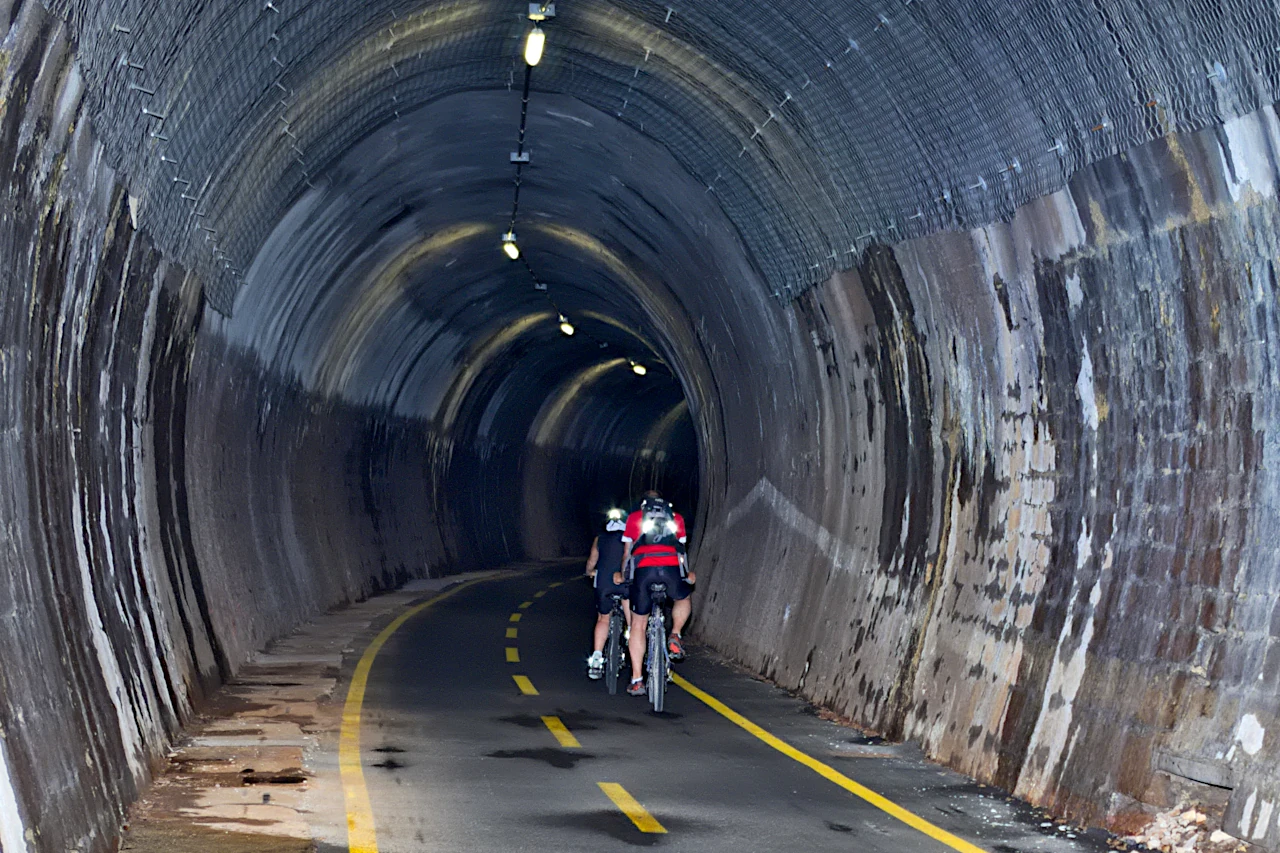
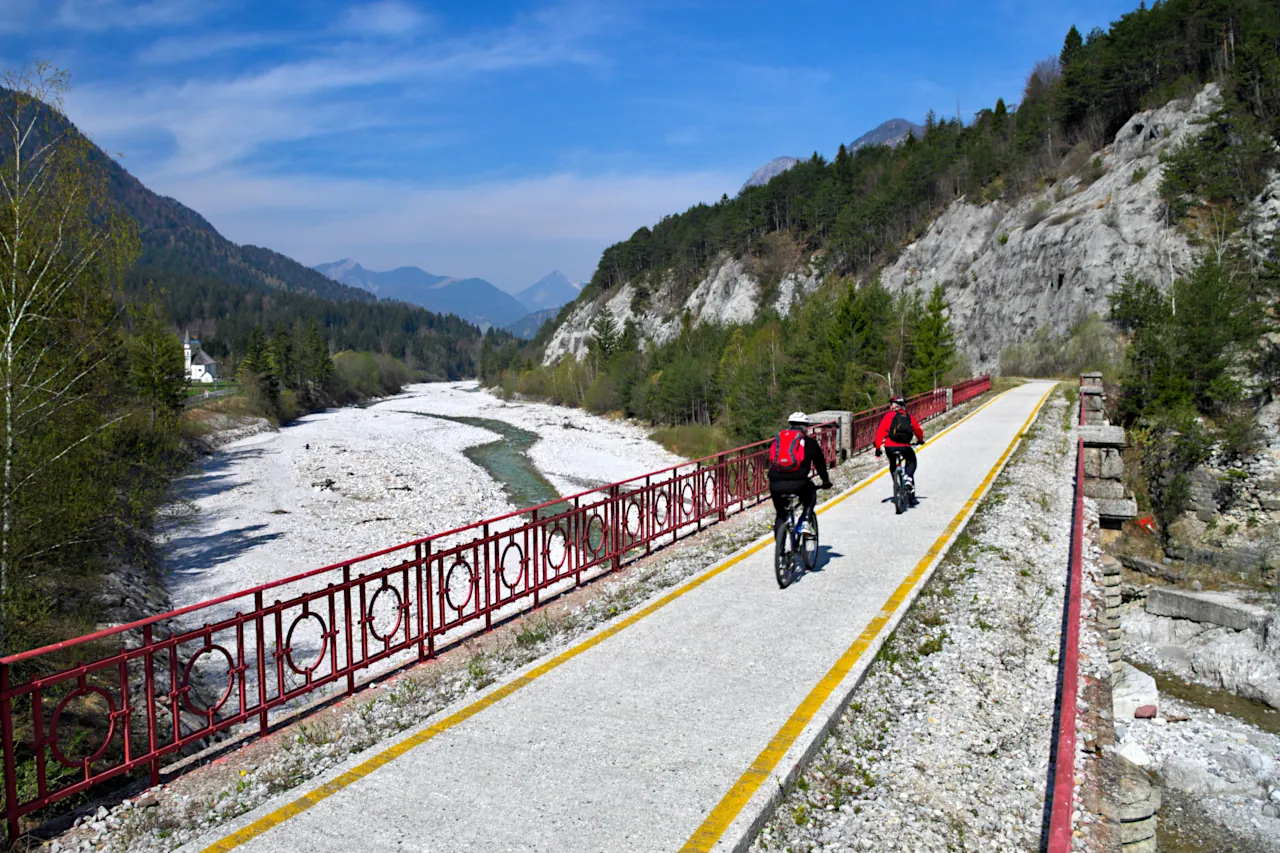
Back on the cycle path, you pedal downhill again entering the two railway tunnels that are located in front of Malborghetto to quickly reach Bagni di Lusnizza, a town famous in the past for a sulphurous water spring with remarkable healing properties. Here the old railway bridge takes us to the opposite bank of the Fella river, offering at the same time a beautiful view over the valley. The Alpe Adria bike route continues along the old railway, passing a short tunnel and a somewhat barren area as it is subject to river erosion.
The cycle path ends at the old railway station of the village "Laglesie San Leopoldo". From this point we have to continue on a paved road with little traffic which in a few kilometers takes us to Pontebba, an important town where the Val Canale ends and the Canal del Ferro begins.
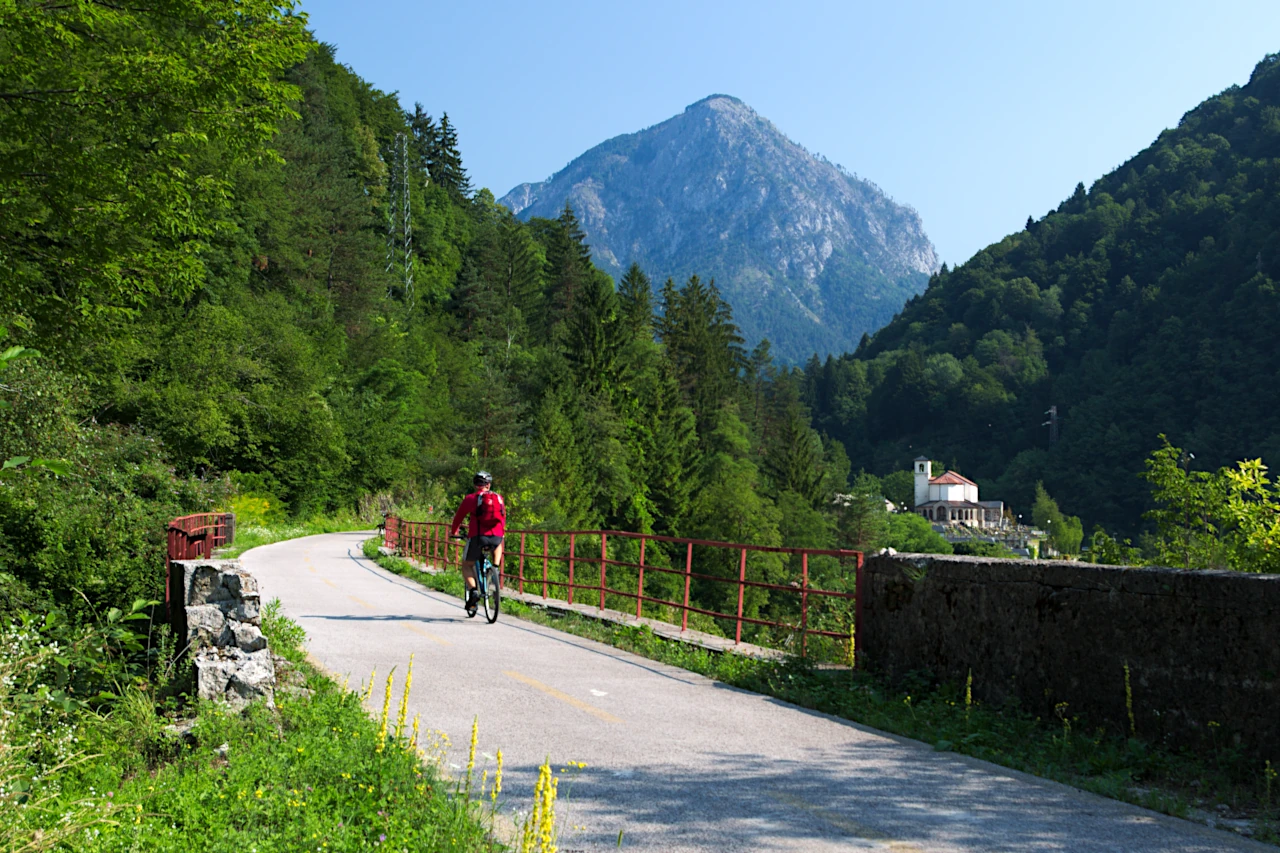
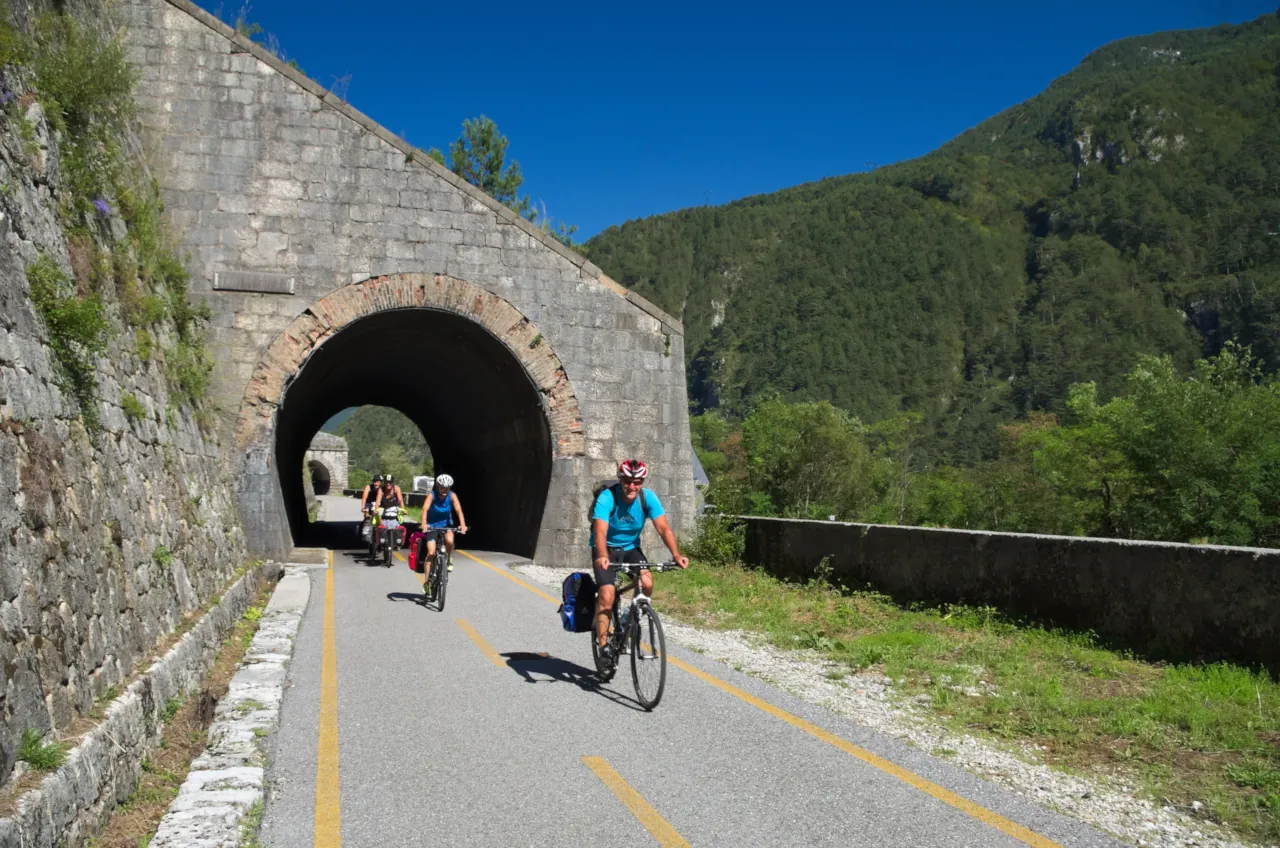
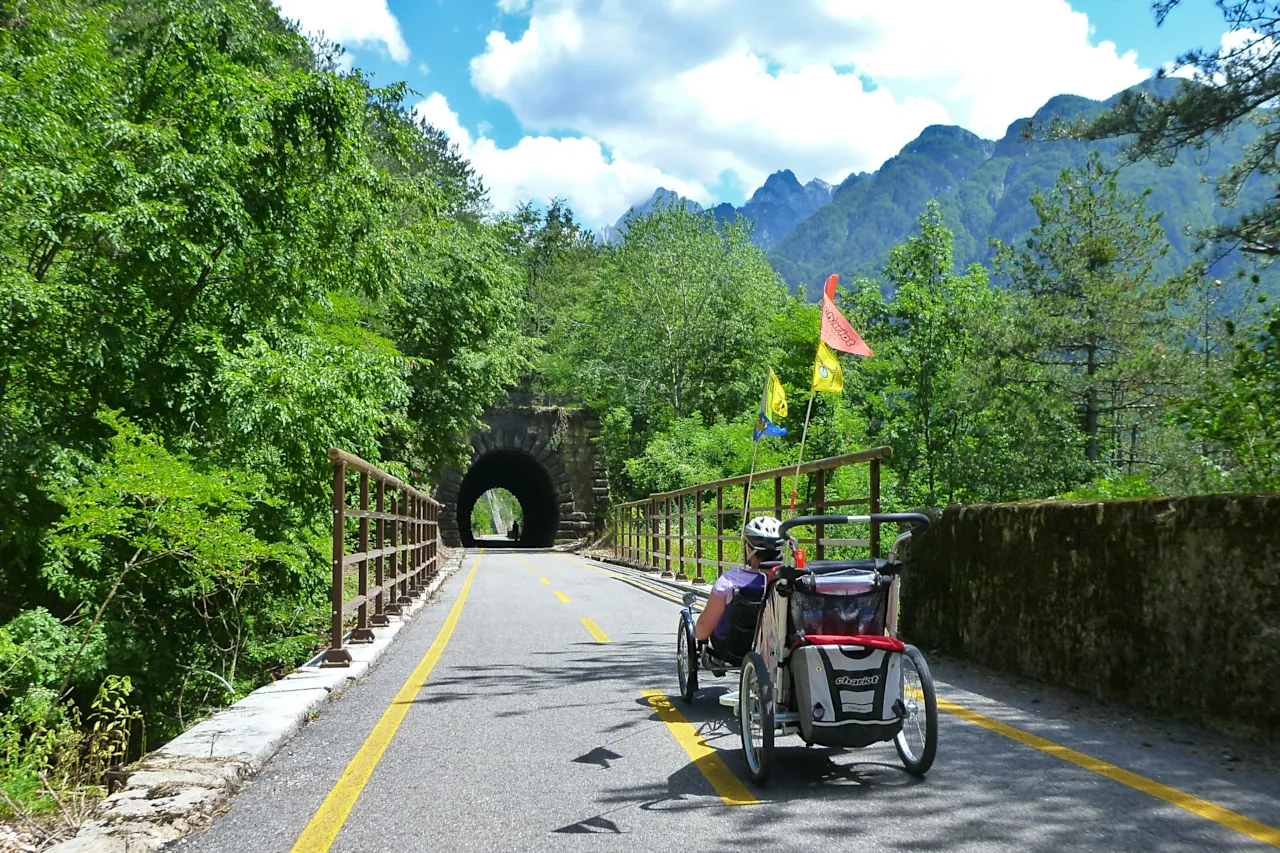
After passing the last houses of Pontebba, the new cycle path branches off to the right which, with a sharp climb, allows you to reach the site of the old Pontebbana railway which has been converted into a cycle path. We are entering the wildest stretch of the Canal del Ferro, characterized by numerous overhanging walls that close off the narrow valley of the Fella river. The cycle path runs for tens of kilometers on the site of the former Pontebbana railway crossing numerous tunnels and a multitude of bridges and viaducts. A truly suggestive stretch that is rightly considered one of the most beautiful cycle paths in the world!
We begin immediately with a work of art: the coat of arms of the royal family has been carved into the rock on the vault of the first gallery we come across. The enormous sculpture was created in 1879 (date of opening of the railway track) to remind travelers coming from Austria that they had entered Italian territory (at the time the border was right at Pontebba).
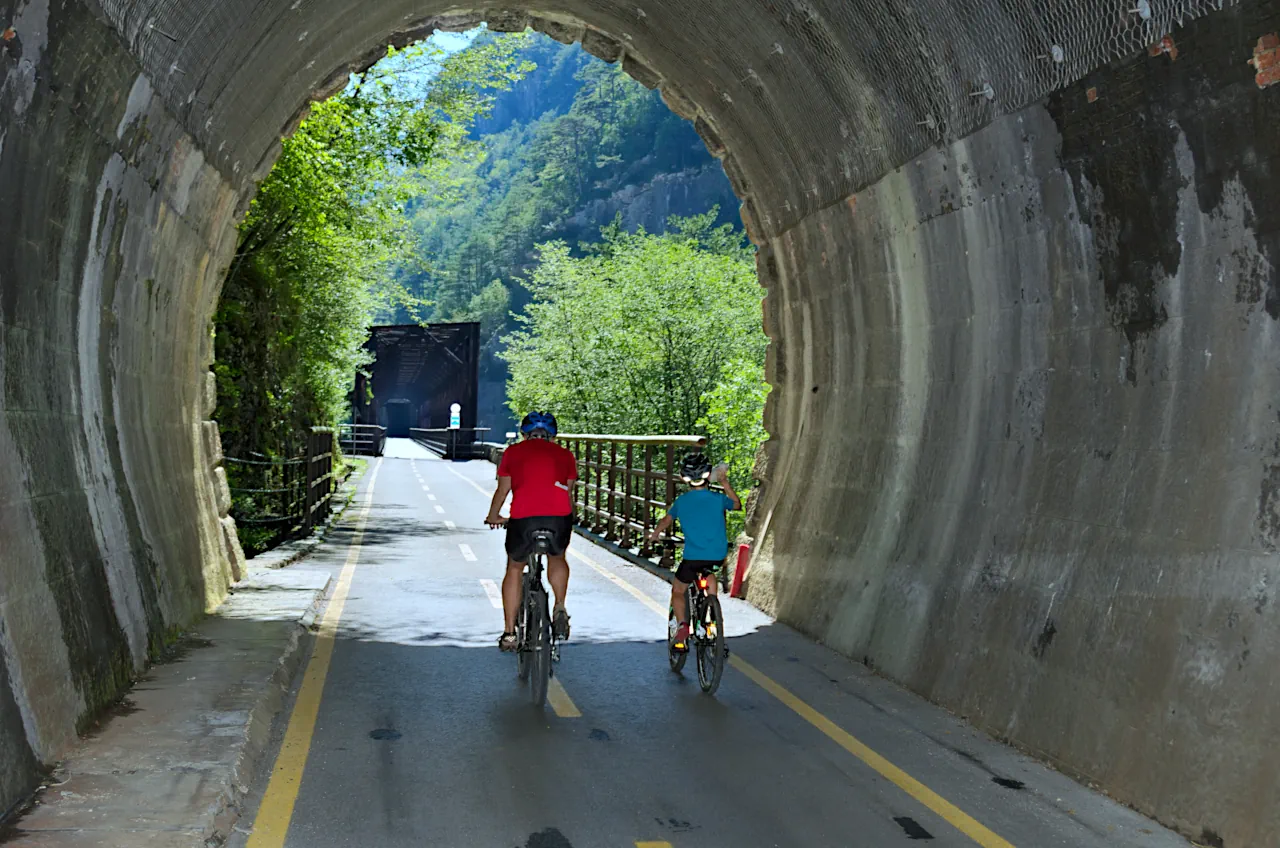
After a few kilometres, take the panoramic "Ponte di Muro" bridge which takes us to the other side of the valley. Continue slightly downhill passing near tiny villages while the landscape sometimes opens up allowing us to admire the wonderful mountains that surround the valley. In Dogna all cyclists stop on the bridge that crosses the valley of the same name to admire the spectacular view of the overhanging walls of the imposing Jof di Montasio. After passing the Cadramazzo waterfall, at the umpteenth bottleneck in the valley, a unique iron bridge takes us back to the other side. Up until the end of the 19th century, "la Chiusa" stood at this point, the impregnable fortress that gave its name to the neighboring town. In Chiusaforte it is absolutely necessary to stop at the station: in the historic building, in addition to the possibility of refreshment and even sleep (do not miss the opportunity to spend the night in a historic station with a century and a half of history!), is growing, day after day , a small museum on the history of the Pontebbana railway.

After Chiusaforte village you will still come across tunnels dug into the rock and the Rio Belipeit waterfall (easily accessible from the cycle path, in summer its waters guarantee refreshment for hot cyclists) while on the cliffs overlooking the Alpe Adria cycle path, it stands powerfully and elegant the Fortress of Col Badin, built in 1904 and currently undergoing restoration. Once in "Ponte Peraria", before tackling another bridge, cyclists can choose between two options. The first leads to Moggio Udinese, through the villages of Roveredo and Ovedasso, following the indications of the BiciItalia 5 route. The road is paved and with little traffic but you need to balance your strength well due to some sharp climbs. The official route of the Alpe Adria Radweg cycle route goes straight over the bridge, following the entire route of the old railway until it reaches the village of Resiutta. If you appreciate nature and popular traditions you cannot miss a visit to the suggestive Val Resia. With an 8 km route (one way) it is possible to reach the town of Prato di Resia where the visitor center of the Julian Prealps Natural Park is located. Alternatively, in Resiutta it is possible to visit the Researtico Mine Exhibition and the neighboring "Galleria Ghiacciaia".
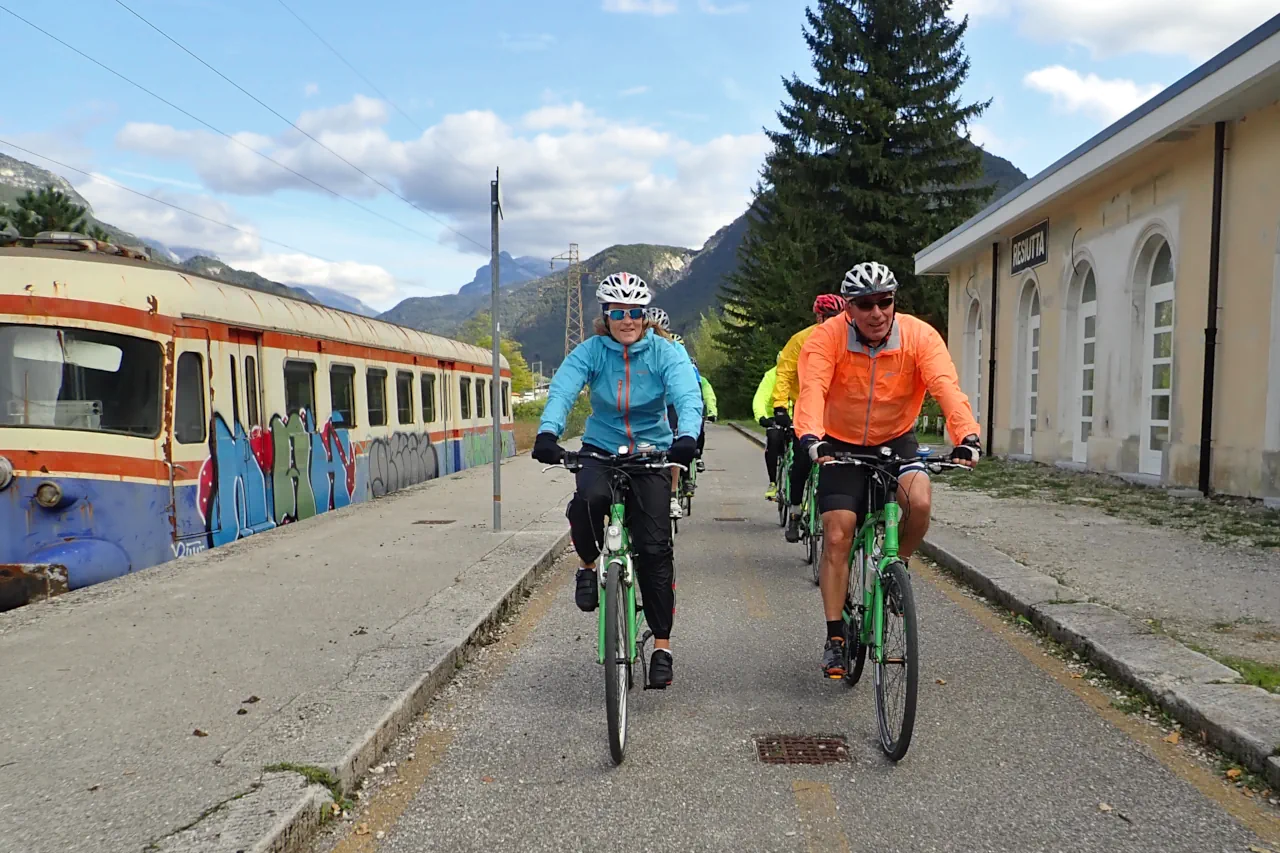
After passing the old railway station of the town, continue on the cycle path built in place of the tracks. In this section, the two longest tunnels of the old Pontabbana railway are faced and you reach the Moggio station, where the cycle path is currently interrupted. Thanks to an underpass we reach the bridge over the Fella where we can choose whether to continue pedaling on the busy state road or to reach the interesting town of Moggio Udinese, famous for its abbey founded by Benedictine monks in 1084 and continue along a suggestive military road that bypasses the Campiolo and continues to the end of the valley, in the municipality of Amaro. Unfortunately, due to a landslide, the Campiolo military road is closed to traffic and the only alternative is to cycle for a few kilometers along the busy state road.
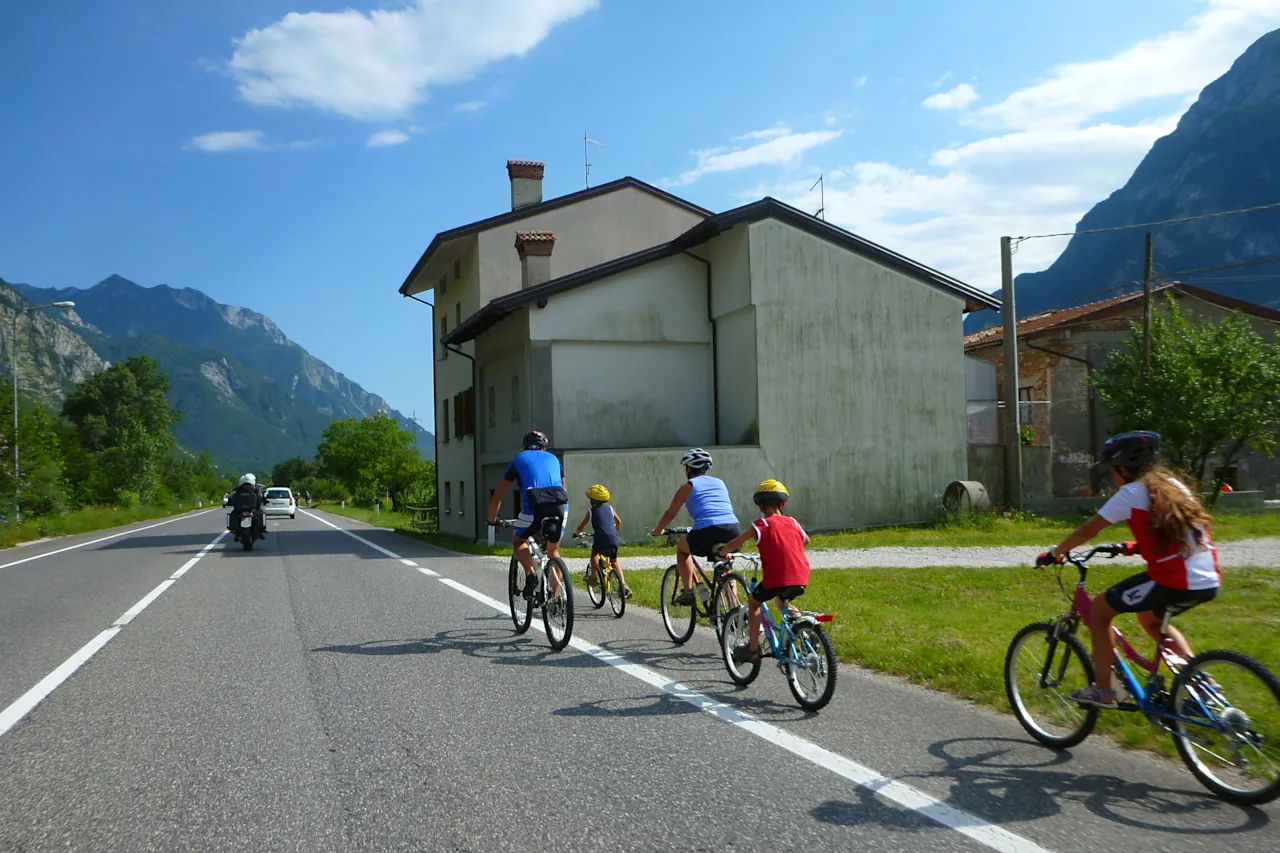
This brings you to Carnia, the town built in the early 1900s around the railway station (in the past the town was known by the name of "Stazione per la Carnia"), and continue towards the capital always pedaling on the state road, except for the part that crosses the "ghost town" of Portis Vecchio (village abandoned following the 1976 earthquake). A little further on, you come into sight of the medieval walls that protect Venzone, the only remaining example in Friuli of a fourteenth-century fortified town, the final point of this stage.
On our YouTube channel you can find some videos on this part of the route: Alpe Adria cycle path: from Tarvisio to Pontebba and Alpe Adria cycle path Radweg: from Pontebba to Chiusaforte.